New Posts

Segregated Education

Growing up and attending school in the Yorkville neighborhood of Manhattan was an eye opening experience to say the least. It’s a section of the borough not many know by name, that begins on 79th street, ends at 96th street, and stretches from York Avenue to Third Avenue. Home of the traditional residence of the city’s Mayors (Gracie Mansion), and located just a few minutes away from the MoMa, the Guggenheim Museum, and the prestigious Park Avenue, Yorkville is surrounded by what many refer to as old money. The neighborhood itself has a median yearly income over $120,000, and is mainly white. The area’s population of black, latino, and other ethnic minorities are mainly located in the Stanley Isaacs public housing projects (ranked among the worst in the nation by the federal Department of Housing and Urban Development (HUD) in 2018). On Yorkville’s northern border lies East Harlem otherwise known as Spanish Harlem or “El Barrio,” where the median income is just over $33,000 and the residents are mainly black and latino. To this date, the border between these two neighborhoods is among the clearest signs of segregation I have ever witnessed, a difference that is immediately visible and palpable once you cross 96th street. 

On the corner of 96th street and third avenue, the border between Yorkville and East Harlem, sits the Isador and Ida Strauss school building. Known in my day as the “Big Blue School”, it is home to two elementary schools, P.S. 77 and P.S. 198, which were a microcosm of the surrounding area, and a symbolic representation of progress deferred. The school I attended, P.S. 77, prides itself on serving young ‘gifted and talented’ students and the students in attendance were predominantly white. To be specific, in the year I began attending P.S. 77 nearly 63% of the students were white and the remaining 37% was almost evenly divided between black, latino, and asian students. In contrast, almost 55% of the students in P.S. 198 were latino, 21% were black, 14% were white, and the remaining roughly 8% were asian. The difference in the schools was not limited to racial demographics either. Over 75% of the students enrolled in PS 198 at the time qualified for free/discounted lunch (based on their family’s income) compared to about 10% of the students in PS 77. The racial and economic disparities reflected in both schools clearly illustrate the divide that exists in the neighborhoods the schools border and speak to a larger trend within the city’s school system.

It is no secret that New York City, arguably the most diverse city in the world, is home to the most segregated schools in the country. The city’s schools are divided into three types: public, private, and charter schools. Roughly 70% of all students in the city attend public school, about 20% attend private schools, and the remaining almost 10% attend charter schools. Similar to P.S. 198’s demographic breakdown listed above, 40% of all the children in NYC’s public schools are latino, 25% are black, 16% are asian, 15% are white, and the remaining students represent multiple races. White students are the minority group in the city’s public schools because more than half of all white students in the city attend private schools. In fact, 66% of students in New York City’s private schools are white. Comparatively, while asian students only comprise about 16% of the students in public school, 61% of all the students in the city’s esteemed specialized public high schools are asian. Black students, who make up 25% of all public school students, make up 51% of the students in NYC charter schools. These numbers considered, it is obvious that the differences in the student populations of P.S. 198 & P.S. 77 speak to a system wide issue rather than just being an individual instance based on circumstance. 

Today, P.S. 198 & P.S. 77’s student bodies look differently than they did 15+ years ago. Just last year, 41% of P.S. 198’s students were white compared to the 14% it once was, and only 20% of students were latino compared to the 55% I mentioned earlier. For P.S. 77, the percent of asian students enrolled nearly tripled from 12% to 32%, while the percent of black students dropped from 11% to 0. What is interesting to note is that though the number of black students enrolled in P.S. 77 decreased, the number of mixed students increased and now make up 11% of the student body. Though I am not exactly sure what caused this drastic shift in both schools, I’m willing to argue that the gentrification of the area (East Harlem specifically) might play a role. 

Yorkville and East Harlem’s border, and the situation playing out in New York City’s public school system serve as proof that we do not live in a “post-racial society” as many people like to claim. Overt segregation of residential areas and the schools within them speak to the reality that very little progress has been made even in the bluest, most liberal parts of this country. White elites continue to separate themselves and their children, while funding to the public education system that mainly serves black and latino students continues to decrease. Though high school graduation rates continue to increase overall, black and latino students are still over 13% less likely to graduate than their white and asian counterparts. All students in this city deserve a quality education regardless of race or class, not just those who can pay for it. Every New Yorker should be concerned that clear segregation is still able to exist despite the city’s diversity because as we all know, there is no such thing as separate but equal.


Further reading:


https://www.manhattan-institute.org/complex-demographics-new-york-public-private-schools
 

https://council.nyc.gov/data/school-diversity-in-nyc/#:~:text=In%20New%20York%20City%20public,residents%20is%20a%20top%20priority.


https://research.steinhardt.nyu.edu/site/research_alliance/2019/06/28/how-have-nycs-high-school-graduation-and-college-enrollment-rates-changed-over-time/


https://furmancenter.org/neighborhoods/view/east-harlem

Digital Bookshelf

Listed below are links to books I’ve found the online versions of. This list will be updated periodically so be sure to check back for any new additions!

(Note: These aren’t necessarily book recommendations, just an online resource for anyone who wants to read something new but may not have room in their budget or home for a book purchase. Since these are free online versions some might have a weird format.)

  1. The Alchemist by Paulo Coelho
  2. The Four Agreements by Don Miguel Ruiz
  3. Women Who Run With the Wolves by Clarissa Pinkola-Estés Ph.D
  4. A New Earth by Eckhart Tolle
  5. Assata: An Autobiography by Assata Shakur
  6. The Bluest Eye by Toni Morrison
  7. The Perks of Being a Wallflower by Stephen Chbosky
  8. Flowers for Algernon by Daniel Keyes
  9. Night by Elie Wiesel
  10. A Thousand Splendid Suns by Khaled Hosseini
  11. Stupid White Men by Michael Moore
  12. Eat, Pray, Love by Elizabeth Gilbert
  13. A Raisin in the Sun by Lorraine Hansberry
  14. The Black Jacobins by C.L.R. James
  15. The Shock Doctrine by Naomi Klein
  16. The Color Purple by Alice Walker
  17. Think and Grow Rich by Napoleon Hill
  18. Rich Dad, Poor Dad by Robert Kiyosaki & Sharon Lechter
  19. The Art of War by Sun Tzu
  20. The Invisible Man by Ralph Ellison
  21. The Color of Water by James McBride
  22. The Five People you Meet in Heaven by Mitch Albom
  23. Memoirs of a Geisha by Arthur Golden
  24. The Skin I’m In by Sharon G. Flake
  25. Push by Sapphire
  26. The House on Mango Street by Sandra Cisneros
  27. Their Eyes Were Watching God by Zora Neale Hurst
  28. The Awakening by Kate Chopin
  29. Narrative of the Life of Frederick Douglass an American Slave by Frederick Douglass
  30. Pedagogy of the Oppressed by Paulo Freire

For Your Consideration, too

Last year I posted my own list of recommended viewing options and now I’m back with part two. Listed below are titles of movies/shows I consider important for us to watch and learn from. Each of these has shined light and provided clarity in various ways, and I hope they do the same for you.

  1. Paris is Burning 
  2. Let There be Light 
  3. Alt-Right: Age of Rage
  4. LA-92
  5. Let it Fall 1982-1992
  6. 13th
  7. I am Not Your Negro
  8. La Operación 
  9. Nova: The Deadly Deception
  10. All in the Family – S:4 E:1 
  11. The Death and Life of Marsha P. Johnson 
  12. What Happened Miss Simone
  13. Capitalism: A Love Story
  14. The Black Power Mixtape: 1967-1975
  15. Park Avenue: Money, Power, and the American Dream
  16. Hip Hop: Beyond Beats & Rhymes
  17. The Queen 
  18. Fat, Sick, and Nearly Dead
  19. Tony Robbins: I am Not Your Guru
  20. The Cuba Libre Story

Click here for more viewing suggestions.

Redlining: Gentrification’s Outline

Gentrification, also known to some as the “Back to the City Movement” or “Urban Turnaround”, is a term that describes the changes that occur in a neighborhood when people with higher incomes begin to move in in large numbers. These changes occur to meet the standards and desires of the new inhabitants and include (but are not limited to) urban renewal projects, new businesses, a heavier police presence, and an increase in the cost of living which results in the displacement of the long-time residents with lower incomes. Though gentrification is a fairly recent phenomenon, only roughly dating back to the 1990’s, the groundwork for its existence began almost a century ago during the Great Depression.

When Franklin Delano Roosevelt was elected president in the 1930’s, he rolled out a series of government plans and programs, known as the New Deal, meant to provide relief for Americans struggling after the market crash of 1929. Programs created under the Housing Act of 1934 were specifically dedicated to creating better and more affordable housing opportunities for working class families, and during this time, entire housing developments were created across the country— including New York City’s very own Housing Authority (NYCHA).

In order to regulate how the new developments were being filled, strict policies were implemented that dictated who could move into a neighborhood by deciding who could be approved for mortgages or rentals. Redlining, one of the strategies used to enforce this regulation, was the practice of city planners taking maps of cities and outlining different areas with different colors to categorize the desirability of each neighborhood. Neighborhoods outlined in red were “least desirable” or “high risk” for lenders, almost always because they had higher populations of black or non-white residents or bordered a neighborhood that did. Banks and lenders refused to approve mortgage loans to families in “high risk”/”less desirable” redlined areas, and also denied mortgages to black families seeking housing in “more desirable” areas where white people lived. The reason being, there was a fear (rooted in nothing but racism) that the value of a property or neighborhood decreased when black families moved in. Now, don’t get me wrong, there were some new housing opportunities for black families, but they were in completely separate areas from the ones set aside for white families and they only made up a fraction of the opportunities set aside for whites.

Redlining was outlawed in theory with the passing of the Fair Housing Act of 1968 meant to protect people facing disrimination in housing. By this time many northern cities had already begun seeing larger populations of black Americans and Puerto Ricans looking for better opportunities, due to the ongoing “Great Migration” and annexation of the island. As a result, white people also began moving in large numbers, mainly out of areas bordering redlined neighborhoods, looking to get away from their new neighbors of color. Their exodus, known as the “White Flight”, was facilitated by the development of highway systems that made commuting to suburban areas surrounding large cities faster and easier. Though this type of migration began in the 1950’s, it is still seen in practice today in many diversifying suburbs across the country.

Now, how does all of this relate to gentrification you ask? Allow me to explain. Over the years, there has been an increase in urbanization across the globe. What this means is that more and more people are leaving rural areas and city-outskirts for more urban areas for various reasons, but mainly for employment opportunities. Not only are there more cities than there were ever before, but the population sizes of these cities are growing very quickly creating a large demand for housing. The United States is not exempt from this trend. Across the country, the suburbs are losing a lot of their appeal for young adults, and many businesses are relocating to metropolitan areas taking their work forces with them.

Today, due to the current income inequality crisis, American people are facing very similar financial strains as they were prior to the New Deal. Young college graduates moving to cities for employment opportunities are finding it difficult to find housing they can afford in more “desirable areas” (as per redlining guidelines). The reason being for this is two fold; on one part, they simply aren’t earning enough money to afford it, and on the other, property value in more affluent areas has compounded over time. The continued investment in areas that were not restricted from receiving loans led to increases in property value and huge concentrations of wealth, while the exact opposite happened in areas that were redlined. Today, when young professionals are seeking affordable housing in large cities their only options just so happen to be the redlined neighborhoods that went ignored for decades.

There’s an old saying that states ‘nothing happens overnight’ and it holds especially true for the process of gentrification in cities across the country. The factors that led to what we are currently experiencing in many low-income black/latino/non-white/immigrant neighborhoods were decades in the making and began as federal policies that were seemingly good, but intentionally unfair. This example of systemic injustice is just one of the many that have been experienced by black and latino people in this country, and reparative action must be taken to address the extreme wealth gap it created.

Additional reading:

https://www.npr.org/2017/05/03/526655831/a-forgotten-history-of-how-the-u-s-government-segregated-america

http://citeseerx.ist.psu.edu/viewdoc/download?doi=10.1.1.858.1477&rep=rep1&type=pdf

https://hbr.org/2010/05/back-to-the-city

https://www.urbandisplacement.org/redlining

#FREETHEM: End Mass Incarceration

Growing up it was far from uncommon to see people posting on social media saying “Free him,  till they free him” and variations of the statement whenever their friend got arrested. It was also not uncommon for there to be a string of names added behind the first one. After a while, one would get numb to seeing these posts, unless of course a name they recognized was included. This is the reality of growing up black and Latino in NYC. 

There’s an old narrative about inner-city neighborhoods having high crime rates, so it’s not always shocking when someone from the hood gets locked up. What no one talks about (except maybe Black and Latinos in the hood) is that these inner-city neighborhoods produce higher crime rates partially because they are more heavily policed than areas with lighter and wealthier residents. Studies have shown that when the police are less active crime rates actually decrease.

Once Ronald Reagan declared War on Drugs, politicians began taking a “tough on crime stance” (an stance previously promoted by President Nixon) and the number of people in prison in the United States grew dramatically. As a result, prisons became a huge business sector. The need for more facilities to house the ever-increasing number of imprisoned people lead to the increase of number of private (for-profit) prisons as well. The war was started under the guise of combatting the crack epidemic, but a large portion of the drug arrests made since have been black people with small non-violent crimes like possessing small amounts of marijuana — a substance less harmful than legal substances like tobacco and alcohol, for instance. According to a statistic in Michelle Alexander’s The New Jim Crow, black people were five times more likely to be ‘stopped and frisked’ than white people, specifically between the years 1997 and 2006. She also explains how today’s criminal justice system serves as a means to strip black people of their freedom, just as similar systems of oppression have in the past.

The 13th amendment which “abolished” slavery, actually allows the enslavement of people who commit crimes. In fact, shortly after the end of slavery, black men were arrested for breaking “Black Codes”, special laws specifically for black people, and were forced to work back on plantations as prisoners. Today, the United States and numerous American corporations continue to generate profit off of virtually free prison labor, paying incarcerated people way below the minimum wage. The prison industrial complex also makes profits off of incarcerating thousands of Blacks and Latinos, and spends fortunes lobbying for strict crime laws to ensure their cells are filled.

This country has preyed on black bodies since before it was even founded and our hoods are suffering the consequences. We are not free while our men are in shackles. Our communities are crippled by the lack of strong male figures. Children deserve their fathers, parents deserve their children, people deserve their partners, THEY deserve freedom. End mass incarceration. Free them!

Hood (R)evolution

It is becoming crystal clear that we are still existing in the civil rights era. The overtly racist systems that were seemingly dismantled upon the end of segregation have taken other forms to remain in existence. The oppressive institutions in this country have managed to keep the masses subdued and placated for some time, throwing us bones to quell our activism. Bones like “affirmative action” and others that create the appearance of equal treatment of the races without actually providing said treatment. Over the years, there have been countless marches protesting police killings of unarmed black men and women (one of the many problems plaguing the black community as a result of systemic and institutional racism) and yet we have barely seen any of these murderers in uniform receive appropriate punishment for their crimes. An entire movement, Black Lives Matter, was created in response to these killings, and justice still has yet to be served. It is this reality that has caused me to reflect on the civil rights and Black Power movements of the past to try to understand what made them so powerful, how they compare to today’s struggle, and what we can do going forward.

The United States has assassinated every person who stood up to unite black people in the past. People like Malcolm X, Dr. Martin Luther King Jr., and Fred Hampton, just to name a few. It has also eliminated political groups like the Black Panther and Young Lords parties – which were created to unite, uplift, and empower black and Latinx people – as punishment for their activism. Today, the people who arguably have the largest influence on the black and Latinx youth are celebrities, typically musicians and athletes, whose strings are usually pulled by their management teams and record labels often run by white elites. The remains of once strong political groups are now street gangs that are constantly at war with eachother.

After decades of seemingly tolerant presidents being in office, the country is now being led by a person who has given power to white supremacist groups, igniting racial tensions that appeared to be non-existent to untrained eyes. These groups, who are pridefully heavily armed and infiltrate job occupations of all kinds, create a violent atmosphere for all black Americans daily. White supremacists aside, even liberal/left leaning whites and non-black people of color, are weaponizing race and fueling the spread of anti-black rhetoric all while claiming not to be racist. These factors combined create a racial climate reminiscent of the past.

A helpless unrest caused by a desire for equality and justice is palpable among black and Latinx youth. Cries for an end to injustice never cease, and actions taken never seem to amount to any progress. For a long time now, it has felt like we are on the brink of a revolution that never occurs, a revolution where black people stand in their power and fight for the respect they deserve. The question is, are we in a position to create the change we seek?

It is becoming clear that black people cannot rely on the United States to repair the damage done by 400 years of oppression, that type of reparation would be almost impossible to achieve — how do you correct generations of internalized trauma and abuse? It is also becoming clear that we can’t change how we are treated or viewed or valued by others, it is beyond our control. It may be more productive to shift our efforts to the only thing we can control, ourselves. What can we do to help ourselves and improve our communities without relying on government and outside intervention?

The people of Black Wall Street in Greenwood, Oklahoma built incredible wealth in less than 100 years after the abolition of slavery. Who is to say the same can’t be achieved today?

I think about our inner-city hoods and wonder how we could revolutionize them from within. It seems that there is so much misplaced and misused power and influence, it is time we start channeling it correctly. If the people who hold as much weight in their neighborhood and communities as they claim to on social media stepped up and began to lead their communities towards property ownership, entrepreneurship, political participation, and collaboration, there is no limit to the progress we would see in our neighborhoods.

What would happen if the street gangs in our inner-cities found a new M.O.? One that revolved around empowering their communities and caused them to operate in a similar fashion as the Black Panther Party once did. What would happen if profits from organized crimes were combined to purchase property in their neighborhoods, or fund black businesses, black schools, black enrichment and educational programs, black food pantries, etc? What would happen if gangs stopped fighting each other and started leading their communities, creating political platforms and controlling local government? Trapping to fund community work so that one day we can say we run our blocks because we own them. This is not to say I am condoning illegal activities, but if they are going to be done, why not do them with a purpose?

The revolution that could not be stopped would be one we create amongst ourselves, working on ourselves, so we can take back what should belong to us. It is time for us to be the change we want to see as much as we protest for our government to create it. Following the lead of the revolutionaries who came before us and taking our power by any means necessary; one property at a time, one black judge, one black politician, one black business owner at a time. Black communities ran by black people for black people. A hood evolution would be the truest revolution.

For Your Consideration…

In the past couple of years or so, I’ve been more diligent in seeking informative entertainment to occupy my down time. The reason for this, in part, is a desire to dedicate more time to things that serve personal and intellectual growth. It is also particularly because of my love of knowledge and my passion for learning that I seek to watch things that will teach me something new or enhance my perspective on topics I thought I knew well enough.

Listed below (in no particular order) is a personally curated selection of shows and documentaries for anyone interested in expanding their viewing horizons. These options will teach you something new while capturing your attention and keeping you engaged. I’ve watched them all (I wouldn’t be recommending them if I hadn’t), and I really hope you do too!

1. Heal

2. Reggie Yates: Outside Man

3. Rotten

4. Miss Representation

5. Inequality for All

6. Earth’s Natural Wonders

7. The Pyramid Code

8. Kingdoms of the Sky

9. The Secret

10. The Story of Us

11. First Face of America

12. Food: Delicious Science

13. The Magic Pill

14. The Family

15. Gender Revolution

16. The Last Shaman

17. Brené Brown: The Call to Courage

18. Saving Capitalism

19. El Sendero de la Anaconda

20. Explained

This list will be updated periodically so be sure to check back for more viewing suggestions!

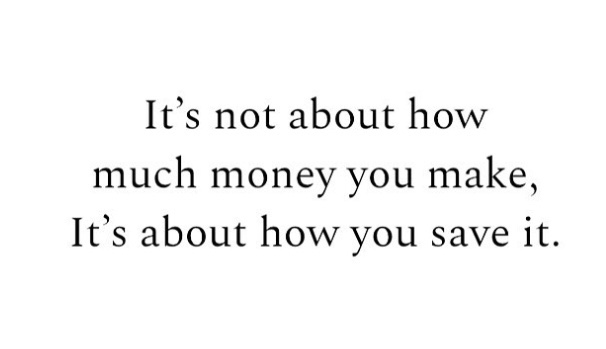
Saving on a Budget

Are you tired of being broke? Would you like to finally see a comma in your checking and savings accounts? Until the government figures out how to solve the income inequality crisis, here are some tips I use to help me stay on track with my financial goals.

These tips will work no matter if you’re making minimum wage or bring home a six figure salary. How do I know? Because these are tips that help you exercise control over your finances. Part of the secret to building wealth when you’re working with a fixed income is in how you spend the money you do have. It can be hard making a dollar out of fifteen cents, but even harder if you’re not being conscious of how you’re spending your coins. These tips will help you come face to face with your spending habits and make adjustments that will benefit you in the long run.

  1. Switch to cash. It’s easy to lose track of card swipes, but hard to ignore the feeling of breaking a twenty dollar bill. Sticking to cash helps you be more aware of exactly how much you’re spending because unlike with your bank account, you can’t wait until later to check the damage you did. Your empty wallet will remind you instantly.
  2. Stack it, don’t spend it. Shed the ‘I’ll get paid again’ mindset that you use to rationalize impulse spending. Say no to things you WANT but don’t NEED, and say yes to the extra money in your savings! Long term benefits outweigh instant gratification, remind yourself of this when you find yourself wanting to spend frivolously. Stack your money, you’ll thank yourself later!
  3. Set up a flexible monthly budget, and stick to it! Outlining your usual expenses helps you to be mindful of how much extra “spending” (or possible saving) money you have to work with so you don’t spend beyond your means.
  4. There’s food at home! Cut back on the amount of money you spend on outside food and I promise you’ll notice the difference. Spend money on groceries and take food from home for lunch. Saving $10-20 daily adds up real quick! Also, eating food from home allows you to make healthier meal choices for less! (Ex: Buying a couple packs of frozen veggies for $5 vs $10-$15 on one salad).
  5. Be disciplined and consistent. If your spending habits are as erratic as your moods are, you are dooming yourself to a life of financial instability. Reaching your wealth goals will require you to learn to say ‘no’ and make smart choices. Once you make a habit out of exercising control and using proper judgment, it will be easier to stick to the budgets that will help your accounts flourish.

These aren’t get rich quick schemes, but incorporating these tips into your habits (if you don’t use them already) will allow you to reach new levels of financial security with the amount of money you already earn.

Do you have any tips you use? Feel free to share them in the comments below!